Working with Nature Walk - Powerscourt Estate & Gardens
A note about my walk today at Powerscourt Estate & Gardens, guided by Brian O'Toole from Wild acres.
Today I attended a walk and discussion in Powerscourt as part of the Wisdom of Trees weekend event. First of all, the Powerscourt Gardens, listed among the top gardens in the world, are simply beautiful. I have been there many times in the past, and the attention to detail in the landscaping is sublime. The gardens feature many beautiful mature specimens from around the world, as do many stately gardens.
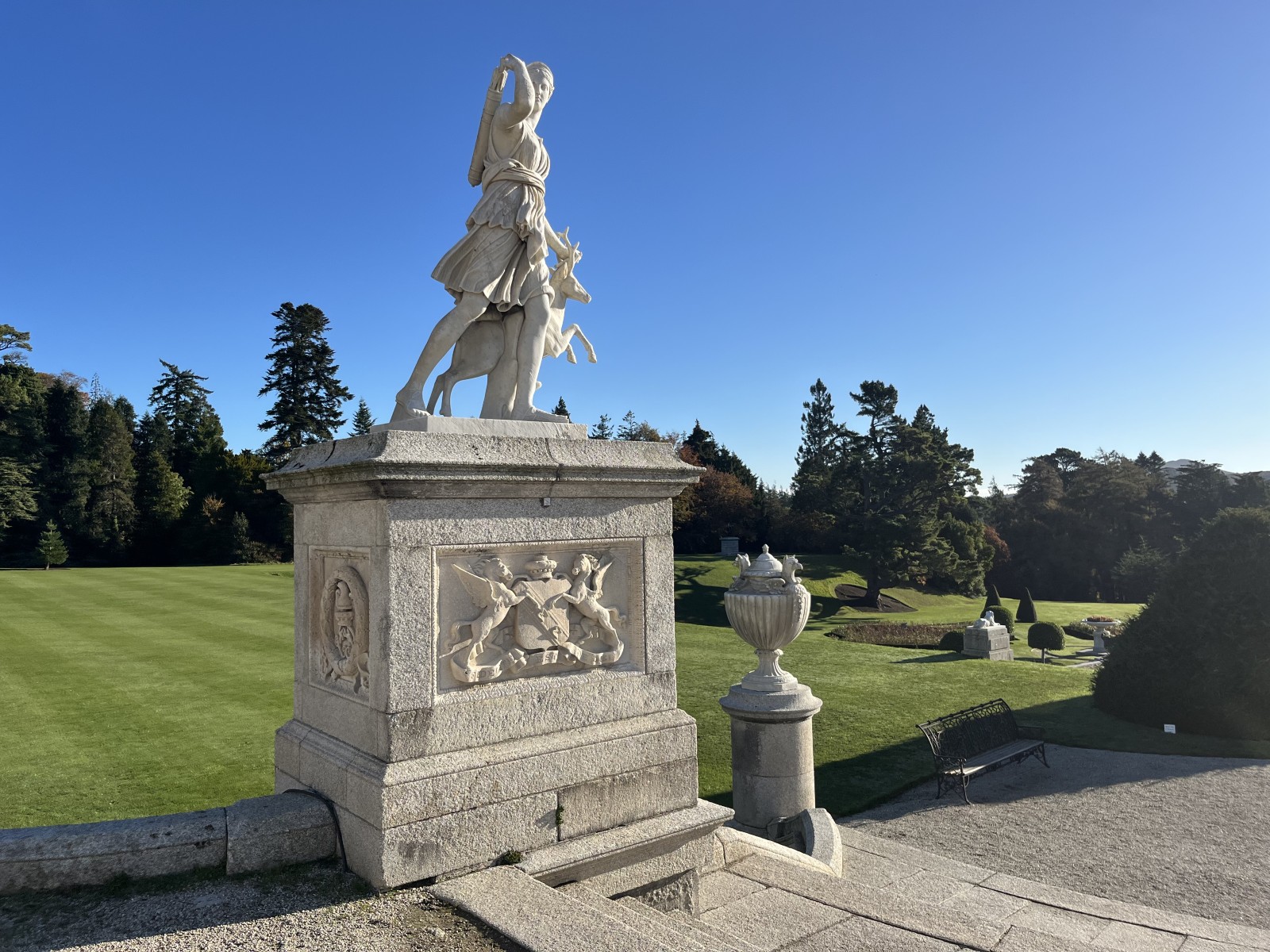
Majestic sculptures from the gardens.
This walk and event, however, focused on species native to Ireland, and why choosing native species where possible is important, as they are interlinked with and have evolved alongside the wildlife of Ireland.
The morning was beautiful and fresh, with magnificent borrowed views of the mountains in the distance. After a quick check-in, the group gathered atop the cascading garden steps leading down towards the fountain. Brian introduced himself to the group, gave a brief overview of what we would be looking at, and cracked a few jokes while he was at it. The atmosphere was relaxed and welcoming as we set off along the trail.
The first species discussed was (Pinus sylvestris). Brian noted that this species is native to Ireland, with a nod to the Rockforest refugium in the Burren, Co. Clare. This was an impressive specimen, seemingly marked by an old lightning strike but showing remarkable resilience. Despite its wounds, it continued to thrive and served as our introduction to one of Ireland's three native conifer species.
Brian pointed out the dead wood on this tree and discussed how different characteristics of a tree lend themselves to different wildlife habitats. Crevices within dead wood, for example, can provide nesting sites for bird species that favour such conditions.
We moved on to discuss a large beech tree (Fagus sylvatica) reaching over a stone wall. Although not native to Ireland, it still has value for insects and wildlife. Brian introduced the concept of allelopathy, a biological defence strategy used by (Fagus sylvatica)and also by sweet chestnut (Castanea sativa). I found this particularly interesting, as it was something I had not encountered before. Chemicals released from decomposing beech leaves can inhibit the growth of competing plants, helping the tree maintain its dominance within the woodland.
We also encountered a huge mature sweet chestnut (Castanea sativa), the largest I have seen in person. Its bark twisted upwards in a striking spiral pattern, making it a particularly impressive specimen. Although not native, it was undoubtedly one of the most admired trees of the morning.
(Taxus baccata) or the yew tree, was the second of the native conifers we encountered. Some attendees discussed Irish place names and their possible links to ancient stands of trees, such as Terenure in Dublin, along with the word "Dáire", associated with Oak. Brian told several stories surrounding the discovery of an upright form of yew that was subsequently propagated and distributed around Ireland. He also recounted the fierce territorial nature of thrushes when defending their chosen yew refuge from intruders.
Next, we came across common ragwort (Senecio jacobaea) and bramble (Rubus fruticosus agg.), two species that are often overlooked despite their ecological value. Brian noted that although ragwort can be toxic to horses and cattle when dried, it provides breeding grounds for the cinnabar moth caterpillar (Tyria jacobaeae).
This brought back memories from childhood, when Carlow Castle was surrounded by large patches of ragwort, long since disappeared. I remember the curious fascination these striking caterpillars inspired. The vivid orange and black bands of the cinnabar caterpillar remain a strong memory to this day.
Bramble, which Brian joked "still continues to hurt despite what names you call it", provides protection for young trees that can emerge through its canopy and flourish, initially defended by its prickly, far-reaching stems. A horse chestnut sapling peering through the bramble seemed to confirm his point.
Behind the bramble stood a large common juniper (Juniperus communis), the third of Ireland's native conifers. Although I did not get the opportunity to inspect this tree closely, it is a species I intend to research further, as the junipers I am more familiar with are (Juniperus chinensis) and (Juniperus procumbens) 'Nana'.
We continued on to discuss oaks, both (Quercus petraea) sessile or Irish oak and (Quercus robur )pedunculate or common oak. Brian spoke about the specimen before us, and the discussion also touched on hybridisation between oak species. This particular tree may have been coppiced in the past and had subsequently developed multiple trunks. One trunk had died but remained standing to a considerable height, providing valuable habitat opportunities for wildlife.
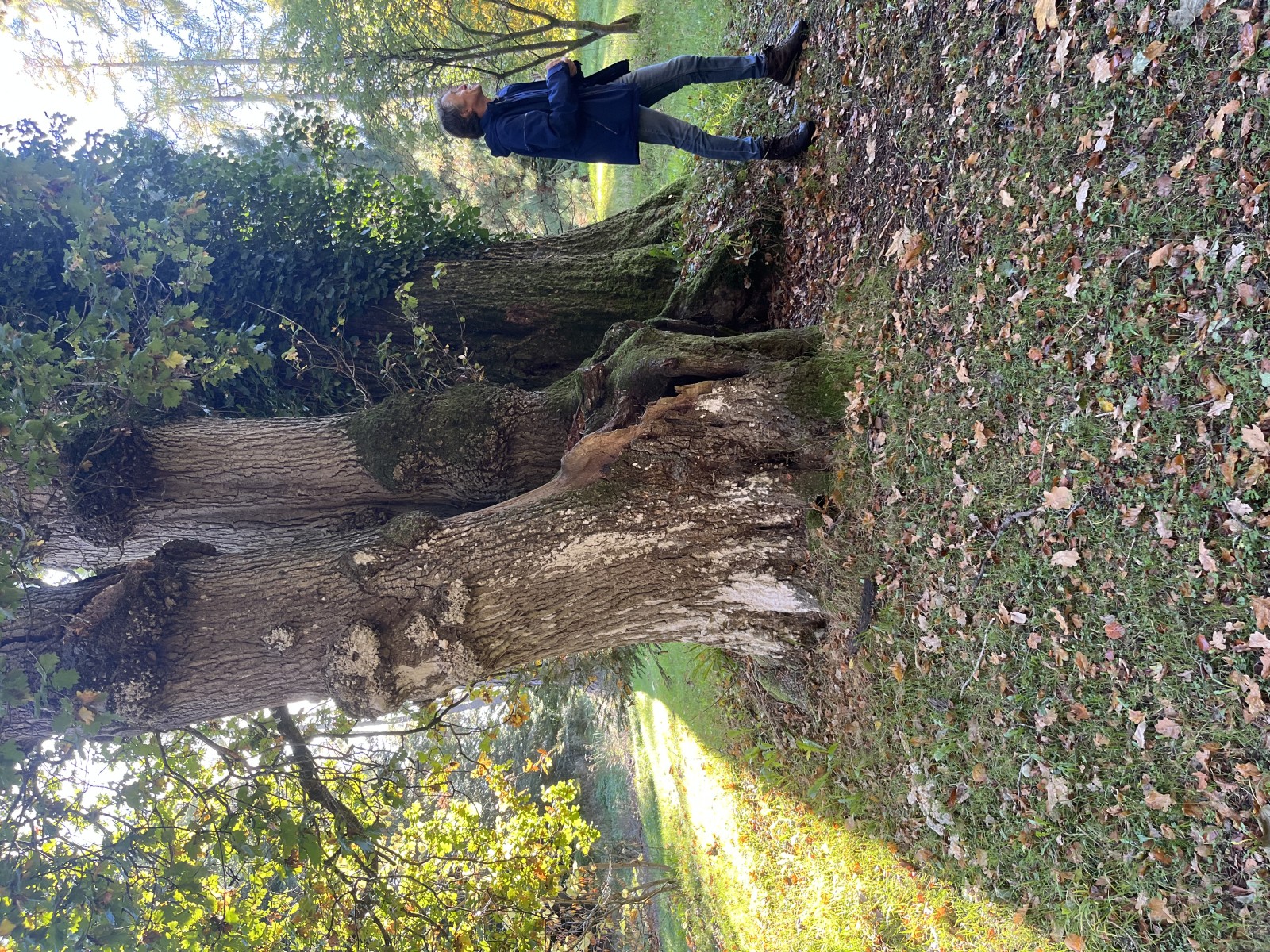
Brian discusses the Oaks
Brian remarked that there are no "bad trees", as even non-native species can provide habitat and resources for wildlife. However, he gave a fascinating comparison with a nearby (Acer pseudoplatanus) sycamore maple. Native oak supports hundreds of insect species, making it one of Ireland's most valuable trees for biodiversity. In contrast, non-native sycamore supports far fewer specialist insects and therefore contributes less to native woodland ecosystems.
Another species discussed was the ivy enveloping the large oak. Brian explained that the open structure of ivy flowers allows a wide range of insects to access their nectar and pollen. Unlike some flowers that favour insects with long tongues, ivy is accessible to many species, which makes it particularly valuable for pollinators later in the year.
We also discussed Ireland's two native birch species, Downy Birch (Betula pubescens) and Silver Birch (Betula pendula), and some of the subtle ways to tell them apart. Before the walk I would probably have struggled to identify one from the other, but learning to look for the hairier twigs of downy birch and the more pendulous branches of silver birch made the differences much clearer.
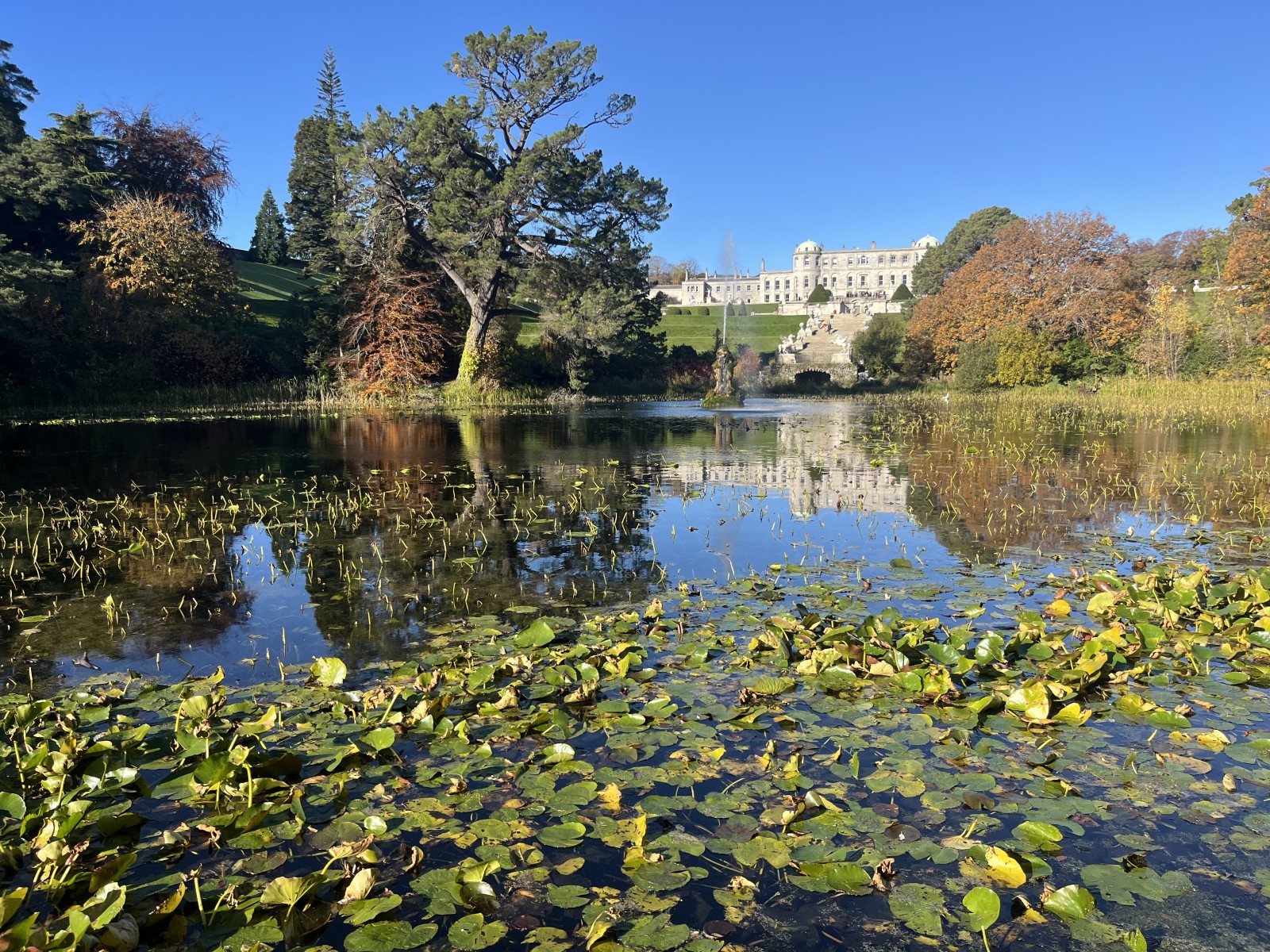
A view from the lake toward the house.
We later stopped beside a native holly tree, (Ilex aquifolium), where Brian discussed the different reproductive strategies found in trees. Some species are monoecious, meaning that male and female flowers are found on the same tree, while others are dioecious, with male and female flowers occurring on separate individuals. Holly is dioecious, meaning that both a male and female tree are required for pollination and berry production. This explained why some holly trees become laden with bright red berries while others nearby never produce any at all.
Another species that captured the group's interest was the strawberry tree, (Arbutus unedo), one of Ireland's less commonly encountered native trees. Brian explained that the species name unedo is often translated as "I eat only one", originating from a Latin, Brian joked he often eats many. One of the attendees asked whether strawberry tree would make a suitable hedge. Brian replied that it could indeed form an attractive evergreen hedge and suggested that native species such as this are often a far better choice than many commercially promoted hedging plants. He pointed to species such as cherry laurel (Prunus laurocerasus), which has become invasive in many parts of Ireland, outcompeting native woodland flora and reducing biodiversity.
After the talk was concluded, I thanked Brian for the discussion and introduced myself. I thoroughly enjoyed the morning and its definitely an event I will keep an eye on in future. There was other talks and discussions over the weekend that I didn't realise were taking place, maybe next year.